
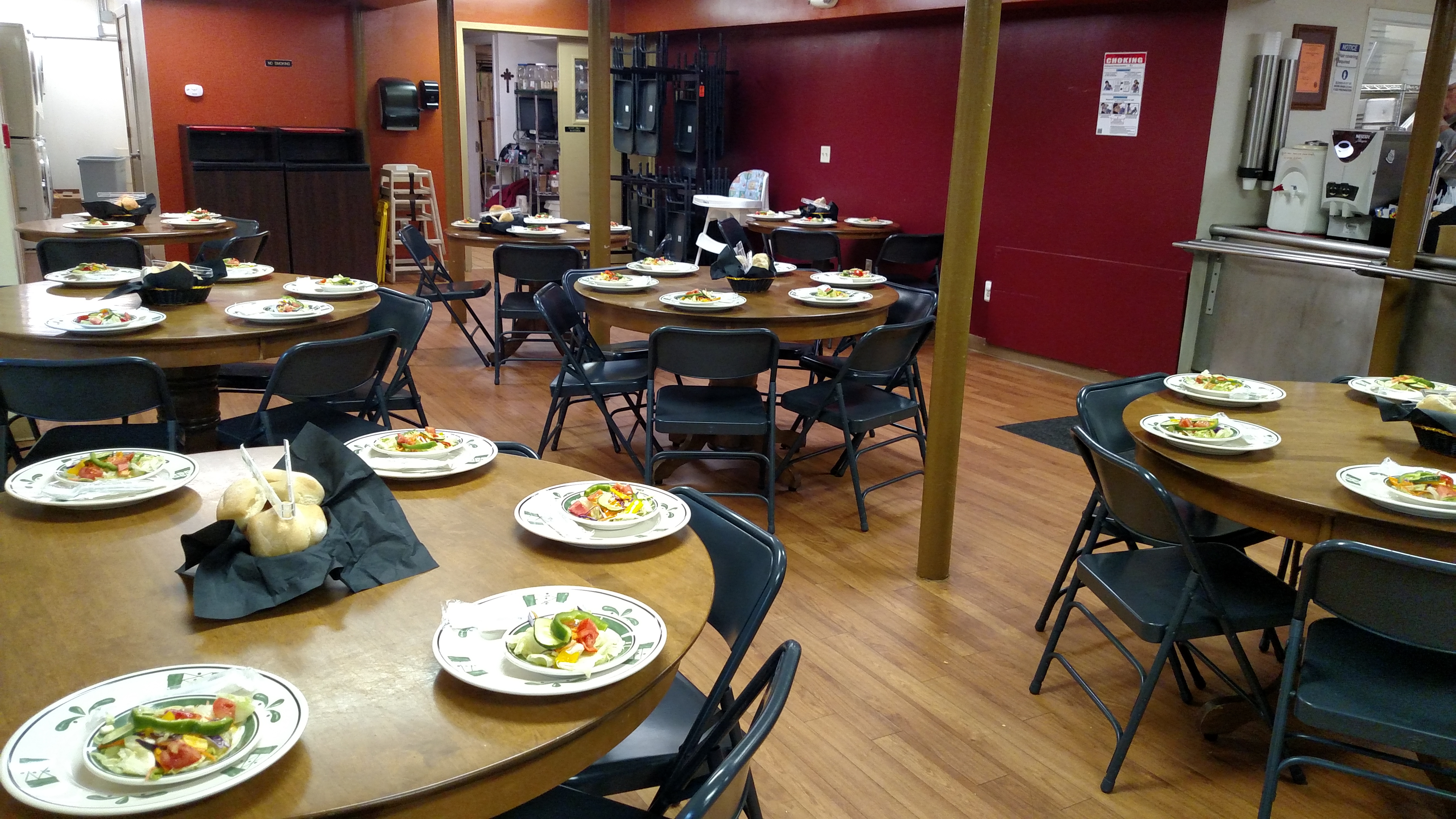
Over the past 18 months, we have made some major changes to the “soup kitchen” that I am executive chef at.
We no longer call it a soup kitchen. I hate what most people think when they hear “soup kitchen.” We have started to call it “Community Kitchen On Main”.
We are also now about 90% a scratch kitchen — that means we are cooking and creating wholesome and delicious food everyday, not just opening cans, re-heating food, and grabbing stuff from the freezer.
As much as possible, we make our own dressings, sauces and dishes. I have finally (!) worked through the 20 cases of instant mashed potatoes I inherited from the regional food bank — all real mashed potatoes here. Though I try and limit how often we serve them — we are trying to emphasize healthier foods like sweet potatoes, squash, brown rice, whole grain pasta and fresh produce.
We have also worked very hard to improve the quality and appeal of the space itself. No more VCT tiles, white walls, folding tables. We have wood floors, round custom-built wood tables, artwork from local artists, bright colors on the wall.
And today we launched a new experiment: family-style service.
That means no more segmented cafeteria trays, no more standing in line, no more steam table scoop-and-dump. Everything is being served to each table — on platters, and in bowls — family style.
Why? Because we have faith that wholesome food, prepared and served with love, bestows dignity and invites hope.
We think family-style is more dignified.
And it also leads to important social interactions, like “can you pass the peas, please?” No joke, for many of our guests, these kinds of basic interactions are both dignifying and humanizing.
There are two more reasons why I am so committed to trying this experiment… growing up the middle of 7 children, family dinner was one of the most significant parts of our life together. It is where we laughed, cried, argued, shared, caught up and generally stayed connected. In a world increasingly filled with TV dinners, and grab-n-go meals, family dinner was a priority in my family. At our agency, we focus on meeting people’s basic needs. Community — and social interaction — is a basic need as important as food, clothing or shelter.
The second experience I had with family-style was working at a Christian camp in the Adirondacks during college. This camp served over 500 teenagers family style three meals a day. The idea was simple: model for people what community and family looks like.
So many of our clients are alone. So many have lost family — and community — ties. FOr many, “pass the peas, please” is actually a big deal. A really big deal.

 BEN DUBOW
Leave a reply to The Master’s Kitchen | FAITH AUTOPSY Cancel reply